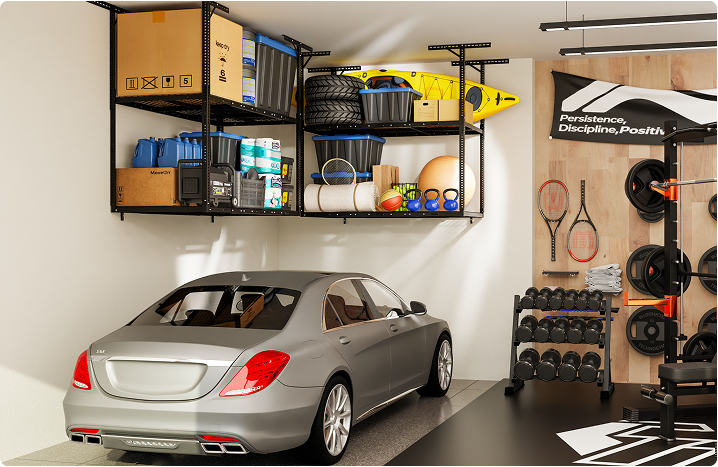
Garage organization often comes down to one core decision, overhead racks vs wall shelving, and each option solves a different kind of clutter problem. Fleximounts makes both categories, giving garage owners a way to compare ceiling-mounted storage against wall-mounted systems before committing floor space or tools to the project. This article looks at how the two product families differ in design, capacity, and practical fit.
Understanding Overhead Storage Racks in the Fleximounts Range
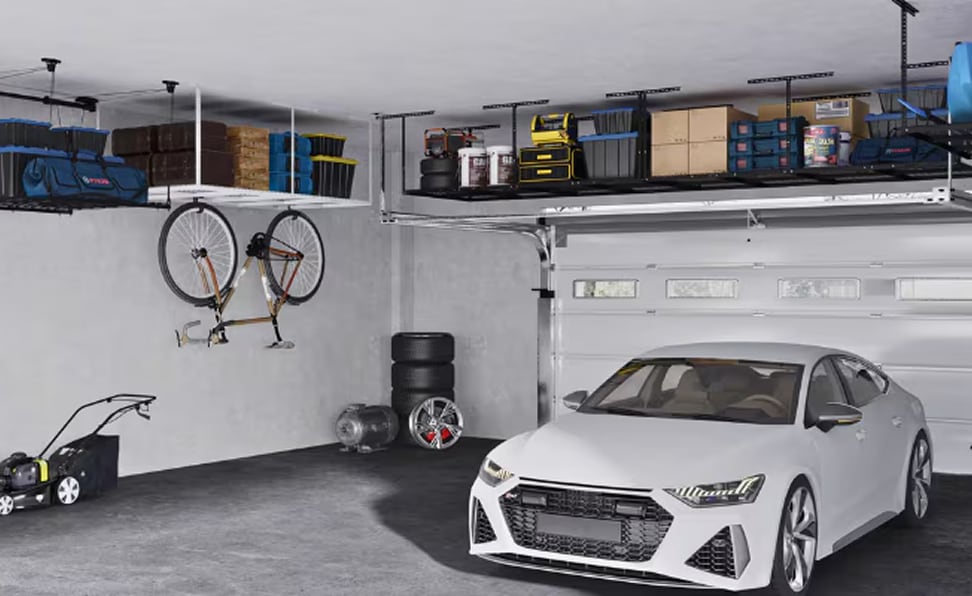
Overhead storage racks are built to use the ceiling, a part of the garage that rarely gets any attention. Fleximounts markets these racks as a way to store bulky, infrequently used items such as luggage, bins, and seasonal gear above the vehicle line. The brand’s product listings include the GR Classic Series and the 4′ x 8′ GR48 Classic rack, both designed for mounting into ceiling joists. A related option, the GR48F, is offered without decking, giving buyers a choice between a finished platform and an open frame.
The GR Classic Series and GR Max Series: Overhead Rack Differences
Within the overhead lineup, Fleximounts separates its standard racks from its heavy-duty line. The GR Classic Series covers the brand’s core ceiling rack, while the GR Max Series is described as a heavy-duty overhead garage storage rack built for larger loads. There is also the GL1, a 4×4 ft garage lifting storage rack, which adds a lifting mechanism rather than a fixed mounting point. Each of these targets a slightly different garage need, from simple seasonal storage to larger equipment that benefits from adjustable height.
Wall-Mounted Shelving Options: WR Classic Series and WR Pro Series
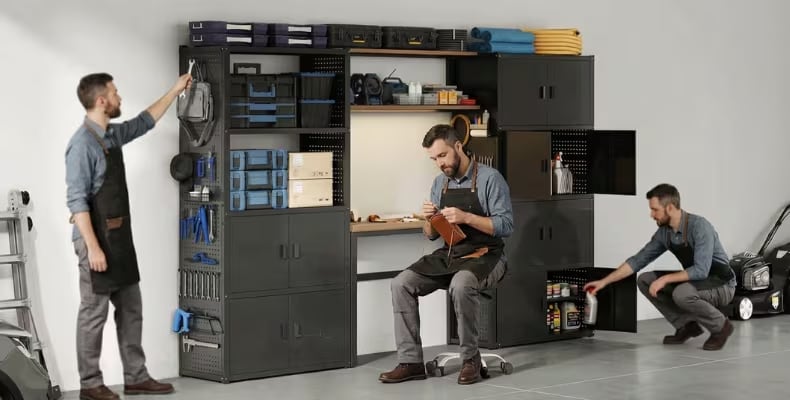
On the wall side, the WR Classic Series forms the entry point into the brand’s shelving range, sold as classic series wall mounted shelving. The WR26MB is listed as a Pro 2x6ft heavy duty garage storage shelving unit, suggesting a reinforced step up from the Classic line. Fleximounts has also highlighted the WR26 Classic 2-pack of 2′ x 6′ wall shelving in past promotions, noting an installation template and bubble level included with the unit. This mix of standard and reinforced wall options sits alongside the overhead rack line as the second half of the brand’s core storage catalog.
Load Capacity and Weight Handling Across Product Lines
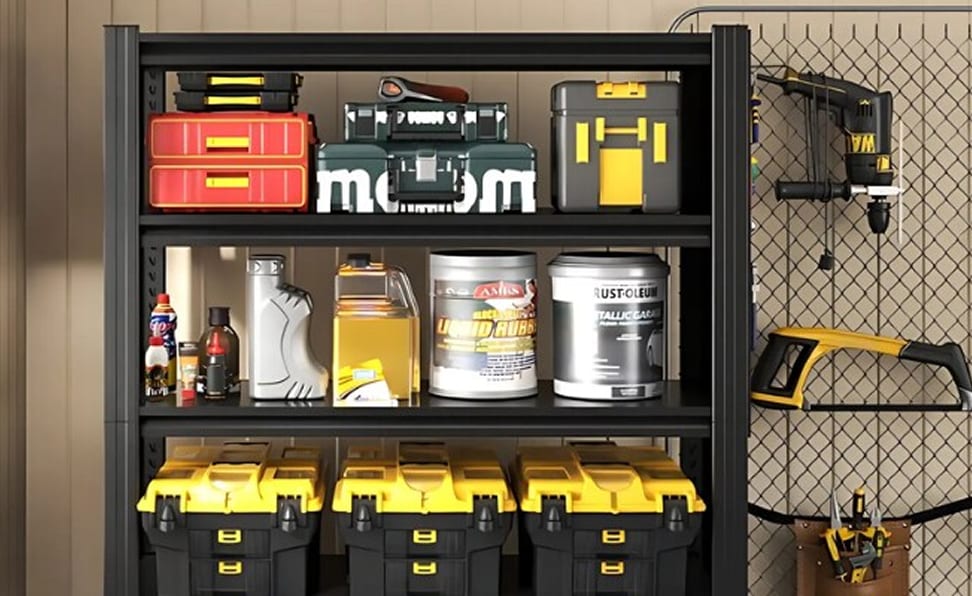
Weight handling is one of the clearest ways to separate these two systems, and it is a central part of any overhead racks vs wall shelving comparison. It states that its wall-mounted garage storage solutions use heavy-gauge steel capable of handling up to 800 lbs, a figure the brand attaches specifically to its wall shelving line, while the BR24B Pro Series 2-pack of 2′ x 4′ wall shelving carries a separately stated 440 lbs total weight capacity in a black finish. These numbers show that even within the wall shelving category, capacity varies by specific model rather than applying evenly across the whole range. Buyers comparing overhead racks vs wall shelving on weight alone need to check the individual listing rather than assume one figure covers every unit.
Spatial Considerations: Ceiling vs. Wall Installation
Ceiling and wall installation each change how a garage layout works, and the better fit depends on whether a garage has more spare ceiling height or more spare wall length. Overhead racks sit above the vehicle, which keeps the floor and walls completely clear for parking or workspace. Wall-mounted shelving, meanwhile, occupies vertical surface area that would otherwise sit empty, without reducing headroom above a parked car. Fleximounts positions its overhead rack line around making the most of ceiling space, while its wall shelving pages describe turning unused wall area into smarter storage.
- Overhead racks generally require mounting into ceiling joists, which can involve more measuring and a slightly longer installation process than a wall unit.
- Wall-mounted shelving, such as the WR26 Classic, has been described with an installation template and bubble level meant to simplify the mounting process.
- Overhead racks free up the entire floor and wall area, making them a fit for garages where parking space is tight.
- Wall shelving keeps items within easy reach at standing height, which suits tools and gear used on a regular basis.
- Garages with low ceiling clearance may favor wall-mounted options, while garages with high ceilings and limited wall runs may lean toward an overhead rack.
Durability and Material Comparison Between Overhead and Wall Systems
Both product families are built from metal framing, though the specific gauge and finish vary by model. The GR507S-W is described as a modular garage storage cabinet system that includes a 35.4 inch wide shelf, showing how Fleximounts extends similar steel construction into cabinet-based products as well. The FS626 is listed as a heavy duty metal adjustable garage shelving unit intended for industrial shelving use, which points to shared material choices across the brand’s standing shelf and wall shelf lines. Fleximounts frames its overhead and wall products around durability and space efficiency, giving buyers a consistent material language to compare when weighing overhead racks vs wall shelving for a specific garage.
Choosing between the two ultimately comes down to what a particular garage has in surplus, open ceiling height or open wall length. Both systems from Fleximounts address the same underlying goal of moving clutter off the floor, just from different directions.